Welcome to the X edition of the This is the North podcast newsletter.
Tackling Poverty and Disadvantage in Schools
By Alison Dunn, in conversation with Katrina Morley OBE and Sean Harris FCCT
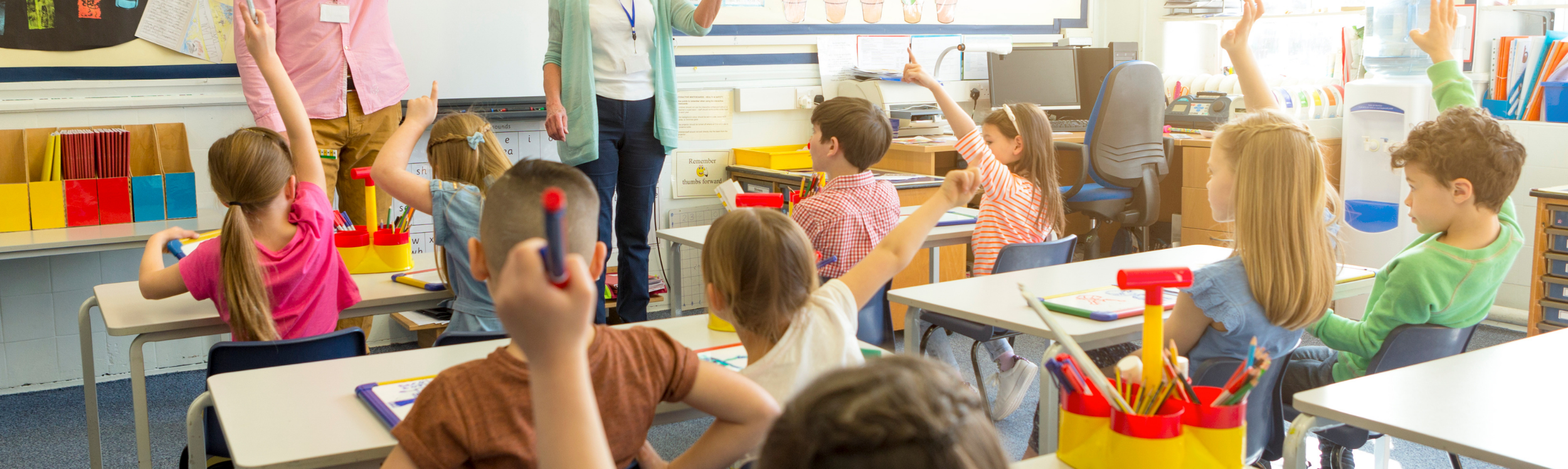
A boy in one of Sean Harris's primary schools told him what poverty looked like at home. He said things were tough when his mum had to start putting things back on the counter at the supermarket because she could not afford them. Then he told him what he had decided to do about it. He said he knew he needed to work harder at school. Because it was one less thing for his mum to worry about.
If anyone tells you children in low-income families lack aspiration, give them that boy.
The People Who Run Toward the Problem
Katrina Morley OBE is the CEO of Tees Valley Education, a multi-academy trust of five primaries based in Middlesbrough. She was also born in Middlesbrough. Neither of her parents got past O-levels. They decided early that their daughters would have the choices they did not.
She trained as a chemical engineer first. Worked at ICI Wilton and BASF. One of her teachers had told her not to go straight into education, to have a life first, do something else, come back to it. So she did. She ended up as the industrial liaison link between her employer and the schools and universities of the North East, supporting young women into STEM at a time when there were not many of them. Then she swapped careers, to the consternation of more or less everyone she knew. Years later, the trust she runs gets its pupil-premium children further than the national average and keeps its attendance above it.
Sean Harris FCCT is the trust's Director of Place. He is also doing a PhD on the impact of poverty on children's life chances while running a portfolio that includes statutory partners, charities, businesses, and most of the inward investment Tees Valley Education attracts. He is from Lancaster. He came to the North East to read at Durham University as the first in his family to go, and stayed because he started doing youth work with kids, refugees and asylum seekers in the city's east and west ends and found something he could not leave. He decided then that the children of the North East were brilliant and that the systems around them were not.
The Two Myths the Book Sets Out to Break
Katrina and Sean have written a book with Bloomsbury, Tackling Poverty and Disadvantage in Schools, with co-contributors from across the country. The book is not a catalogue of how bad things are. The scale of the problem is well documented. The book is about what schools can actually do, and what they cannot, and where the line sits.
Two myths sit at the centre of it.
The first is that low income equals low aspiration. Katrina rejects this flatly. What low income equates to, she says, is lower opportunity, lower visibility, and lower dignity. If you cannot see a job, you cannot become it. If you cannot afford the clothes to walk through the door, the door does not open. Across the Tees Valley Combined Authority area, access to work at around level two sits among the lowest in the country. That is a pathway problem. The children walking past those closed doors are as ambitious as anyone else. The only people knocking on some of these doors are gangs offering work in child criminal exploitation. The visible economy has lost the visibility argument.
The second myth is that schools, on their own, can teach a child out of poverty.
The book says, directly, on the page, that this is not true. It is a provocation aimed squarely at a sector that has been told for two decades that it is the engine room of social mobility. Schools matter, but the book frames them as civic anchors inside a much larger ecosystem. Health. Housing. Employment. Statutory services. Charities. Industry. Without that ecosystem, schools restate the problem. With it, they begin to shift the conditions that hold the problem in place. People. Place. Policy. Tees Valley Education treats these three as a single equation. The first two are within reach of a school. The third is not, and pretending otherwise is part of how the problem stays where it is.
When Free Doesn't Mean Accessible
World Book Day. A celebration of reading. Loved by almost everyone. Loved less by the parent who has to find a costume on a Tuesday, whilst worrying about having sufficient money to feed their children. This is not just an example of an edge case but the texture of how poverty translates into schools. As Katrina puts it, how do you look a child in the eye and tell them that because they have not got money, they do not deserve equality? How do you look a child in the eye and tell them they are not as worthy?
You do not. So Tees Valley Education runs against it deliberately. There is a uniform shop on site where parents can put a penny in a donation tin and walk out with a clean, washed uniform for their child. There are washers in school. There are farm shops run by parents and Year Sixers who put the experience on their CVs. In Redcar and Cleveland, Citizens Advice Bureau runs sessions on the school site. Katrina tells me they have saved families hundreds of thousands of pounds and given debt advice that the school could not have offered.
The trust calls it upstreaming. Catch the family before the barrier hits the classroom. By the time a child has hit a wall, the school has lost ground that nobody pays back. So Tees Valley Education budgets a significant share of staffing for inclusion and pastoral roles, treats those investments as core, and protects them. Place-based work is school improvement. The trust treats it that way and gets the outcomes to show for it.
What We See at the Door
Anyone who works in Citizens Advice will tell you what Sean's research is finding. The people who come through our door are not lacking ambition. They are navigating systems that were never designed to be navigated without help. The mum on three zero-hour contracts who, by the maths of the benefit system, would be financially better off not working, and who is doing it anyway because she wants her children to see her work, is somebody we meet every week.
The Citizens Advice sessions inside Tees Valley Education's schools matter for a reason that goes beyond the money recovered. When advice walks into the school gate, the school gate stops being a place where families have to be in trouble to ask for help. It becomes ordinary. It becomes part of the building. That changes what parents are willing to bring through the door, and it changes what the door is for.
Sean uses a phrase from the Victorian era for this. Corporate parentage. The idea is that businesses, charities, and institutions in a community share responsibility for the children growing up inside it. The Joseph Rowntrees and the Cadburys built ecosystems on that principle. We have spent the last few decades dismantling theirs and have not replaced them. The libraries that took up the space when those institutions retreated have themselves been closed. The youth clubs went next. What is left is a school, a foodbank we have somehow normalised, rising inequality and the gangs at the door.
The False Economy We Keep Choosing
Expanded free school meals are the obvious lever, and the country is moving toward it slowly. The current threshold sits at around £7,400 of household income. That is not a number that captures most working poverty. Auto-enrolment for free school meals is a real win. Every child fed is a child who can concentrate, attend, and learn. The early-years correlation between free school meals, attendance, and attainment is now well evidenced.
But here is the wider question this conversation kept circling. The Child Poverty Action Group estimates that child poverty costs this country £39 billion every year. Lost productivity, additional public service costs, and the long-term economic damage of children whose life chances were shaped before they reached secondary school. £39 billion. Annually.
How is it that we can find that money to pay for the consequences of child poverty, but not the money to prevent it?
Katrina and Sean make a wider argument that the policy conversation should listen to. The 1% gains. Breakfast clubs that double the number of children who turn up when the food range widens. A two-year-old provision that puts a child into a quality nursery before the gap has had time to open. Each of these moves a small percentage of children, and each of them compounds. By the time that child is sixteen, the cumulative effect of a hundred 1% gains is a different life.
The thing Sean is most afraid of, listening to the policy conversation, is that an expansion of free school meals becomes the box that gets ticked. Done. Sorted. Move on.
But in truth, it is just one stone in a wall that has yet to be built.
There is more in the full episode than has fitted here. We talked about the Centre for Young Lives, Health Equity North, People, Place and Policy, and what happens when a multi-academy trust decides to “Pay It Forward”. We also talked about the burns. Always. Sean's advice to listeners is to be furiously curious. Be furious about the fact that inequality sits in every postcode in the North East, and curious about what is working, what could be better, and what each of us could do about it.
Katrina's is shorter. Commit to being a verb. Do something. And most of all, remember, an ocean is created by every raindrop. I really loved that line, how every raindrop, every small action compounds. I thought about the boy at the supermarket counter when Katrina mentioned that line during our podcast. He has already decided to be a verb. He has decided to work harder so that his mum has one less thing to worry about. He is doing the work he can do, in the only way he can do it, with the tools he has.
Now ask yourself the question that Katrina asks. How do you look that child in the eye and tell him he is worth less than the children in the postcodes around him? You do not. So what are you, what are we, and what is this country going to do about it?
The aspiration is always there. But in truth, in change, we will be judged, not by the rhetoric we use about supporting children growing up in hardship, but by whether children like the boy at the till are given the opportunity, the dignity, and the agency Katrina and Sean know they are owed. And by the foundations we choose to lay today, from the stones we have already been given.
We can do better. We must do better.
Until next time,
Alison
Listen to the full podcast episode:
Spotify | Apple Podcasts
Further reading and resources:
Tackling Poverty and Disadvantage in Schools by Katrina Morley OBE, Sean Harris FCCT, and co-authors. Every penny supports children in areas of significant deprivation.
Tees Valley Education, and their mission to deliver educational excellence for all children by fostering a culture of creativity, curiosity, care, courage and commitment.
The Centre for Young Lives, research on child poverty and education.
Health Equity North, research on health and inequality in the North of England.
North East Child Poverty Commission, regional policy and data.
Children North East, work on poverty-proofing the school day.
Listen to the This is the North podcast catalogue:
Spotify | Apple Podcasts
If you enjoyed this newsletter, please like, share and subscribe. It takes less than 10 seconds and makes you part of something essential: a community of people who believe transformative conversations can become catalysts for positive change.
This is The North Podcast is your source of transformative conversations. An intentional challenge to the systems holding back the North of England. Hosted by Alison Dunn, an award-winning charity chief executive and former solicitor. This podcast is supported by the Society Matters Foundation.
A deep dive into the archive…
X
This week I have been listening to…
X
This month I’ve been reading…
X
This month I’ve been visiting…
X
Where are we with the book?
X