Welcome to the twentieth edition of the This is the North podcast newsletter.
A Crime Nobody Is Required to Notice
By Alison Dunn MBE, in conversation with Ameera Jamil, founder and CEO of Recultured.
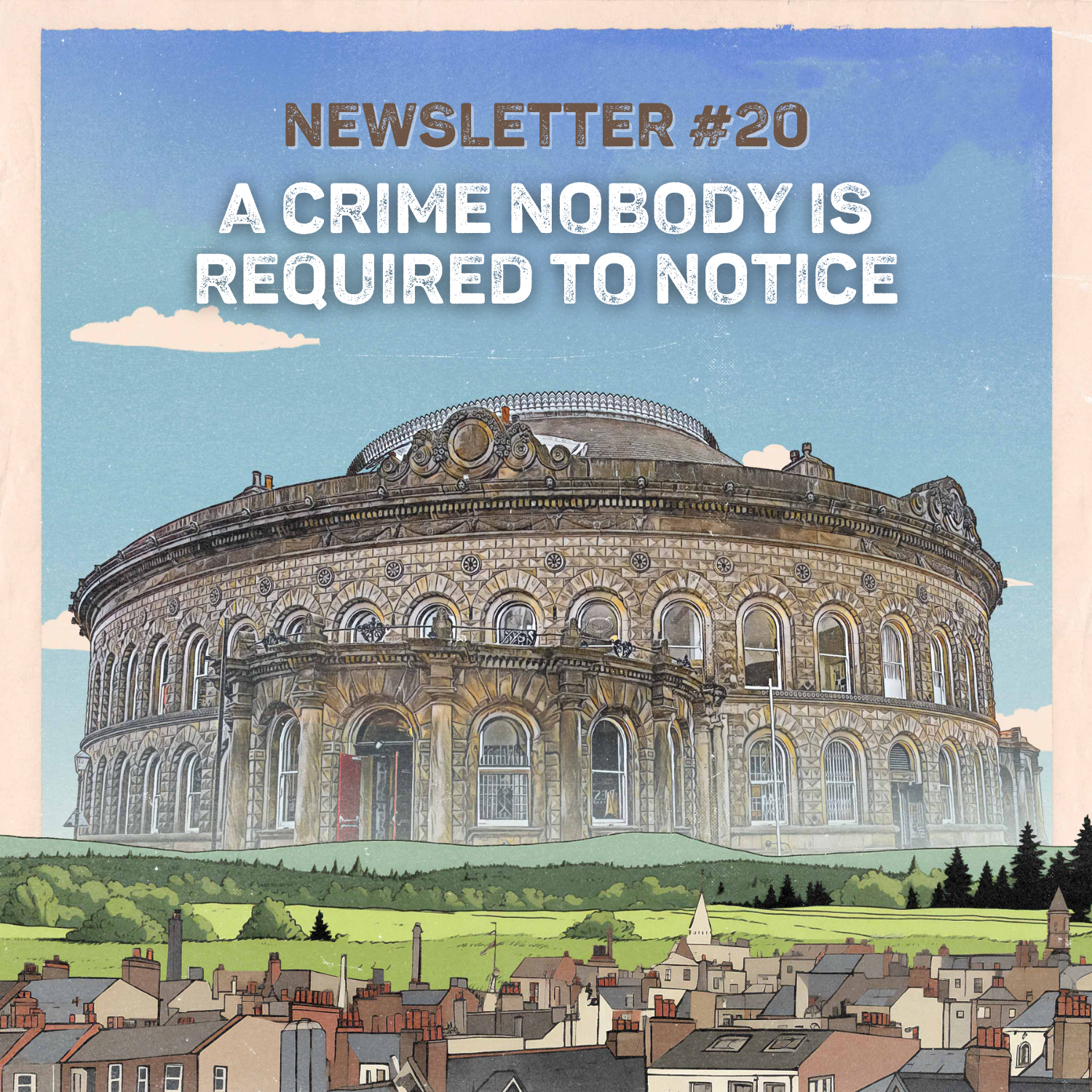
What honour-based abuse and forced marriage reveal about the institutions that still can't see them, and the people who disappear when no one is required to ask.
When Ameera Jamil was at school, a girl in her year stopped coming in. Ameera found out why by overhearing a teacher explain it to another adult, in front of a room of children. The girl's family had caught her with her boyfriend in the park. She had been sent to Bangladesh. She wasn't coming back.
That was allowed to be the end of it. No alarm. No phone call. No safeguarding lead asking a single question.
Ameera has spent the years since asking the question nobody in that room asked.
She is the founder and chief executive of Recultured. Before that she worked on the front line at Karma Nirvana, the national charity that supports victims of forced marriage and honour-based abuse. She now advises universities and trains the professionals to recognise the signs and act on them. So when she tells me the system still has no place to put a girl who doesn't come back, she isn't speculating. She has watched it happen, from the inside, for years.
Honor-based abuse survives on silence. We talk about the victim's. Ameera's work drags the institution's into the light. There is no box for it on the form, no training that teaches people to recognise it, and no rule anywhere that says someone must ask where a person has gone. A crime nobody is required to notice turns out to be an easy crime to commit.
So-called honour
Honour-based abuse is the name for harm inflicted to restore a family's so-called honour. The behaviour judged shameful might be wearing make-up, wearing Western clothes, having friends of the opposite sex, choosing who to marry, or choosing not to marry at all. The list has no end, because each family writes its own, privately, and enforces it however it sees fit. At its worst, restoring honour means assault, coercive control, forced marriage, and murder.
The stereotype is a South Asian girl from a Muslim family. The reality reaches into any culture, including white British families with money and status. Ameera sees it in universities: the student who quietly admits the course was never theirs to choose, that they have been told who to marry and which sort of person is acceptable. That is honour-based abuse too. The stereotype does more than mislead. It tells professionals to look for this in one community and nowhere else, which is precisely how it gets missed everywhere else.
I asked Ameera how something as ordinary as make-up can end up alongside rape and murder. Her answer was that it is instilled so early, and held so completely, that there is nothing left to negotiate with.
And what victims fear most is disownment. Ameera has had people tell her they would rather be hit than cut off. To be disowned is to lose the only world you have ever known, and it is a loss victims carry for the rest of their lives.
The scale we can see is only the part that gets recorded. Nearly 3,000 honour-based offences were logged by police in England and Wales in the year to March 2025, and the Home Office describes that figure as the tip of the iceberg, because so much of this never reaches anyone official at all. There is another gap in the numbers. When one of these ends in a death, it is recorded as murder, and the reason for it drops out of the numbers entirely.
For years this sat under domestic abuse, and Ameera understands why. But the label was wrong, and what it got wrong is the number of people involved. Domestic abuse is done by a partner or an ex. Honour-based abuse is done by parents, siblings, aunts, uncles and the wider community, together.
Imagine the run-up to a forced marriage. A fifteen-year-old is taken to be fitted for a wedding dress. Taken to choose jewellery. Taken to be examined to prove her virginity. How does a girl pass through all of that, in front of adult after adult, and not one of them asks a single question? Every one of them had the chance to ask. Not one of them did. That is why getting the label right matters.
The excuse, used twice
Shafilea Ahmed was seventeen when her parents killed her. She had reached out to statutory services more than once before she died, and she was failed each time. Ameera is precise about why. The professionals who could have stepped in used culture as the reason not to. They didn't want to tread on anyone's toes. They wanted to be respectful.
And culture does not only excuse the family. It excuses the professional across the desk, the one who decides not to look too hard for fear of causing offence. Ameera's correction is blunt: put the culture to one side and look at the abuse. No religion permits harm in the name of honour. Faith and culture are meant to give a person identity and belonging, and here they are used as an excuse for the opposite. This is a safeguarding issue. A public health issue. In several of its forms, a criminal offence. None of that shifts according to where a family is from.
The other half of getting it right is believing what a victim tells you about her own family, even when it sounds too extreme to be true. Banaz Mahmod gave police the names of the relatives she believed would kill her. They were the people who went on to murder her. She told them, and she was not protected.
The shopkeeper who decided to notice
I recognise this from our own front door at Citizens Advice Gateshead. Some of the people who come to us are being controlled in ways that take time to surface: someone holding their documents, their money, their freedom to leave the house. It is the same pattern Ameera describes. It has simply never been given the same name.
And then there is Ameera's mother. She came to this country at fifteen, married, a child. She was failed by every part of this herself. Years later, from behind the counter of her small shop, she became the person other women in the community quietly told when their husbands hurt them, when their in-laws held their papers. Ameera asked her once what made her break the pattern with her own daughters. Her mother said she looked at how unhappy she had been, and could not do it to them.
That is what a front line actually looks like. A shopkeeper who decided to notice.
No box on the form
Ameera's research is on universities, and the findings are stark.
More than nine in ten universities, she found, have no reporting category for honour-based abuse, forced marriage or FGM. Every institution has a disclosure tool. A student or staff member can report sexual abuse, harassment, bullying. For this, on most of those forms, there is nowhere to click. It tells every institution using the form that this is not one of the things it has to notice. The typical victim is eighteen to twenty-five, which is university age almost exactly, so the box is missing for precisely the people most likely to need it. More than six in ten institutions, Ameera found, offer no specific training, pointing instead to general safeguarding or domestic abuse modules, which we have just seen are the wrong tool. Around four per cent had any real provision for staff who are victims themselves.
Then consider what happens when a student stops attending. It tries to reach them. When it can't, it rings the next of kin. The next of kin is sometimes the very person who forced the marriage. They say what they need to say. And with no obvious wellbeing concern to escalate, the student is quietly struck off. The girl in Ameera's class could disappear from a university today in exactly the same way.
Being made to notice
Two things are changing, and both matter.
The first is legal. In April, after years of campaigning and an earlier government refusal, honour-based abuse was written into law for the first time, given its own statutory definition in England and Wales under the Crime and Policing Act, alongside a power to issue guidance for the professionals who keep missing it. The Act does not yet change day-to-day practice on the front line. The guidance that would make it real has still to follow. This is a beginning rather than a finished thing. But the direction is set, and it matters for a plain reason. It moves honour-based abuse from something professionals are advised to notice towards something they are required to. The change is owed in large part to the family of Fawziyah Javed, a young woman from Leeds, pregnant, murdered by her husband in 2021, whose mother has campaigned ever since so that the next family is met by a system that recognises what is happening.
The second is a date. The fourteenth of July is the National Day of Memory, campaigned for by Karma Nirvana and its founder Jasvinder Sanghera, for everyone lost or harmed in the name of honour. It falls on Shafilea Ahmed's birthday.
Every story here turns on the same missing moment. Someone could have asked, and didn't. The teacher. The dress fitter. The clerk in the university office dialling a number that belonged to the wrong person. Nobody was required to ask.
The map Ameera used to carry into schools, Karma Nirvana's record of those killed in the name of honour, runs from the top of Scotland to Land's End. There are more markers on it now than there were, and not one of them sits in a place that thought this happened here. When a girl stops coming in, somebody, somewhere, has to be the one whose job it is to notice.
The teacher said she wasn't coming back, and that was allowed to be the end of it. What we owe the next girl is a system that has to ask why.
Until next time,
Alison
Listen to the full episode with Ameera Jamil:
Spotify | Apple Podcasts
If you need support
Karma Nirvana runs a national helpline for anyone at risk of forced marriage or honour-based abuse: 0800 5999 247. The Forced Marriage Unit can advise, including where someone has already been taken abroad. In an emergency, always call 999. Reaching a helpline does not mean the police get involved. It means you don't have to carry this alone.
Further reading and resources:
Recultured, Ameera Jamil's organisation, working to change how institutions recognise and respond to honour-based abuse.
Karma Nirvana, the national charity for victims of forced marriage and honour-based abuse, and its map of lives lost in the name of honour.
The Forced Marriage Unit, the joint government unit supporting those at risk in the UK and abroad.
Payzee Mahmod Tedx Talk
Listen to the This is the North podcast catalogue:
Spotify | Apple Podcasts
If you enjoyed this newsletter, please like, share and subscribe. It takes less than 10 seconds and makes you part of something essential: a community of people who believe transformative conversations can become catalysts for positive change.
This is The North Podcast is your source of transformative conversations. An intentional challenge to the systems holding back the North of England. Hosted by Alison Dunn, an award-winning charity chief executive and former solicitor. This podcast is supported by the Society Matters Foundation.

This month’s episode with Ameera Jamil of Recultured reminded me of an early episode of This is the North featuring Alice Wiseman (Director of Public Health for Gateshead and Newcastle) and Dr. Julie Scanlon (expert in women's inclusion) entitled "Mind the Gap: Exploring Gender Equality" released on July 21, 2024.
Whilst this episode doesn’t talk about forced marriage, it does acknowledge in very similar ways how inequality begins before a female baby is born, creating a lifelong cycle of inequality through behaviours, attitudes and actions that society feels are appropriate, or inappropriate, for a woman or girl that is often rooted in cultural norms and traditions.
A deep dive into the archive…
The BBC Sounds Podcast, People Fixing the World.
In this episode they discuss people trafficking, a crime that often takes place in plain sight as victims are often exploited and controlled in everyday situations. It also majors on the fact that this crime may seem abstract to us as we sit behind our desks, but it touches all of us through the food we eat, the phones we use, the clothes we wear all of which may all have been produced using slave labour.
In this episode we hear about a project in the United States of America as we take a ride with Truckers Against Trafficking, a charity that trains truck drivers to look out for vulnerable people who may be being trafficked for forced labour, including sex work. It’s a simple idea but it’s having a major impact, not just for the people who are trafficked but perhaps surprisingly, for the truck drivers too. Well worth a listen.
This week I have been listening to…
Fredrik Backman never fails for me, his story telling is pitch perfect. This offering called ‘My Friends’ is no different as he charts the enduring power of friendship and art across generations. A magnificent book with characters who are flawed but who love deeply through disappointment, hardship and fun packed adventures spanning glorious summer months. Backman is a master of his trade and I can’t recommend his stories highly enough.
This month I’ve been reading…
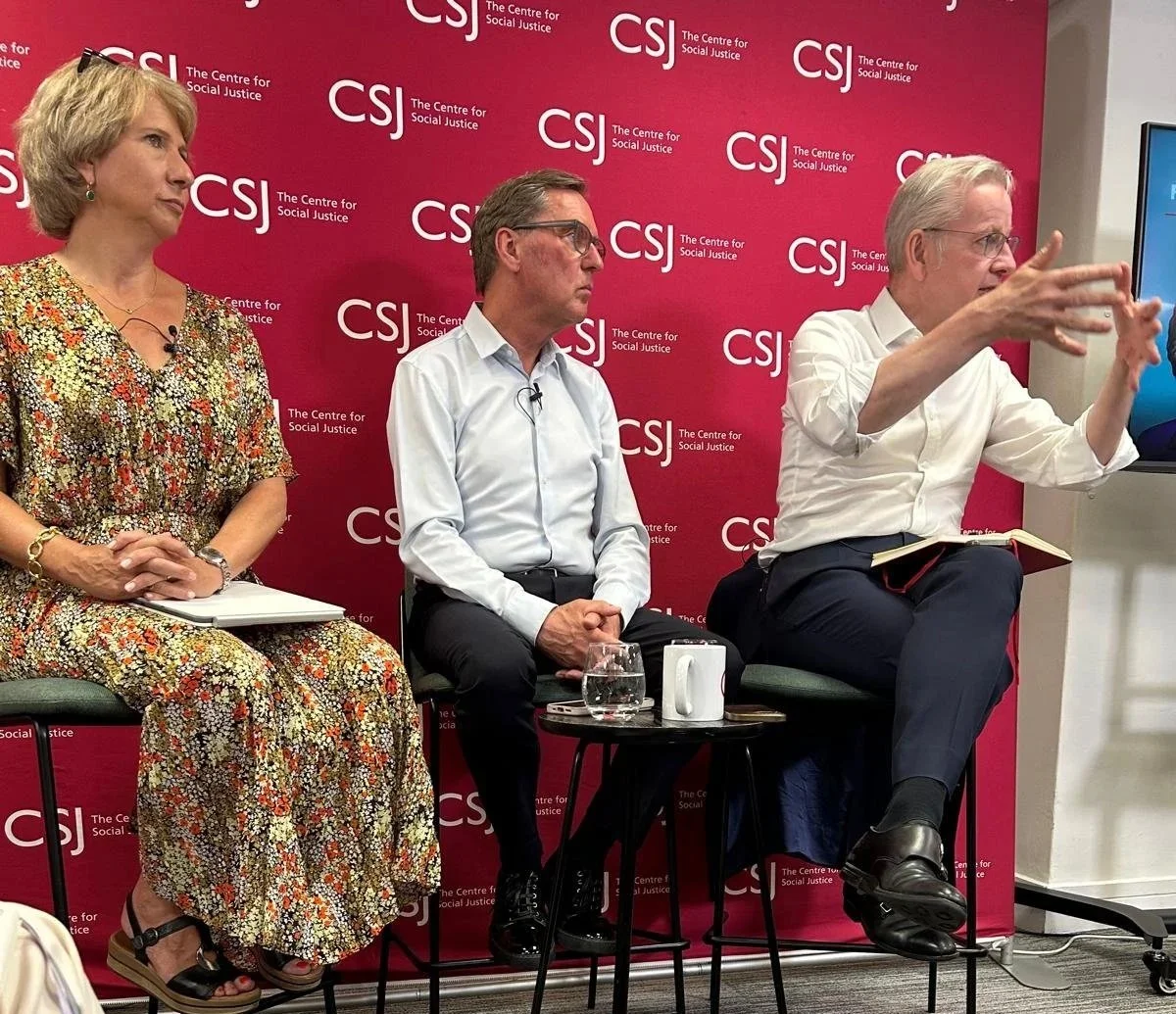
The Centre for Social Justice in London for a discussion chaired by Jo Coburn, with the Rt Hon Alan Milburn and the Rt Hon Michael Gove, about youth unemployment, education and the growing number of young people becoming disconnected from work, learning and, in some cases, wider society. If you’d like to know what we got up to, you can read my reflections on the day.
This month I’ve been visiting…
This week I got to have a great conversation with Ngozi Cole, a leadership coach, board member and long-standing champion of equity and social justice. Today, she is helping to drive the North East Anti Racism Coalition, a movement determined to make our region fairer, more inclusive and prepared to actively challenge racism rather than simply condemn it. One of the themes I got to explore with Ngozi, is why women align themselves with male power and with extreme ideologies that may, at first, appear to offer safety, certainty and protection, but which over time can leave women with less power, fewer rights and fewer choices.
As you might imagine, this can happen in very obvious ways, like the erosion of legal protections such as those contained within the Equality Act but it can also happen more quietly. An example is a hard return to traditional gender roles and the idea that women are naturally, perhaps even morally, better suited to caregiving, homemaking and putting the needs of others before their own.
Now, before anyone starts to scream, I have absolutely no problem with a woman choosing that life. If it makes her happy, fills her cup and works for her family, good for her. The distinction is choice. And choice only really exists when walking away is just as possible as staying. When women have their own economic security, legal protection, voice and power. When one path is not rewarded and the other punished.
You can find out when the book is about to be launched by clicking on this link. Your details will be used responsibly, and you will not be mercilessly spammed – I promise, I’m far too busy for that.