Welcome to the twelfth edition of the This is the North podcast newsletter.
The Nightly Miracle
Ray Laidlaw, Lindisfarne, and Sunday for Sammy
By Alison Dunn, with insights from Ray Laidlaw.
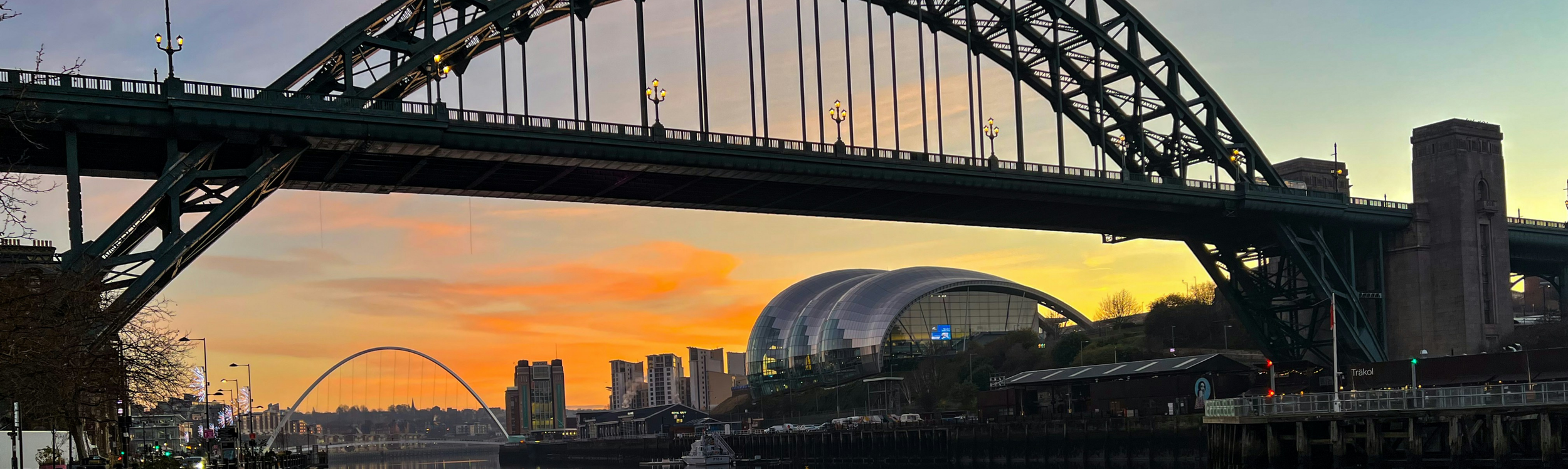
Photo depicting select bridges over the River Tyne by Gabe Fender courtesy of Unsplash
What connects a number one hit, a tribute to a friend, and 700,000 pounds given to young artists?
This week on This Is The North, I sat down with Ray Laidlaw, founding drummer of Lindisfarne and producer of Sunday for Sammy, for a conversation that moved seamlessly between rock and roll history and radical acts of community generosity. Ray's story isn't just about creating anthems that defined a generation (though we certainly talked about that). It's about what happens when success meets purpose, when nostalgia transforms into action, and when a region's musical legacy becomes a ladder for the next generation to climb.
When Fog on the Tyne Hit Number One
Ray's journey began in the early 1960s, playing social clubs with a guitar player named Simon Cowe, doing an "odd collection" of Shadows tunes and Lonnie Donegan songs. By 1971, Lindisfarne's second album became the biggest-selling album of the year in the UK.
"We weren't exactly expecting it, but it was part of the growth," Ray told me with characteristic understatement. "It did completely take us by surprise, the actual success it had. It was such an enormous success. It spoiled us a bit because we would never be able to reach that again."
What strikes me about Ray's reflection isn't regret, it's his honesty. The kind of clear-eyed assessment that comes from decades of perspective. Lindisfarne created music that transcended geography whilst being deeply rooted in it. Songs that spoke with the directness characteristic of the North East, kept "quite straightforward and simple out of choice."
"People speak their mind," Ray explained about the region, "and that echoes through our music. We didn't mess about much in terms of long, lengthy, complicated arrangements. We kept them quite straightforward and simple. I think that summed the band up."
This authenticity translated across oceans. Germany loved them. Holland loved them. Northern Europe embraced them whilst the further south they went, "the more puzzled they were." As the band toured and grew, the pattern reveals something essential about how regional authenticity can achieve universal resonance, not by diluting identity but by expressing it clearly.
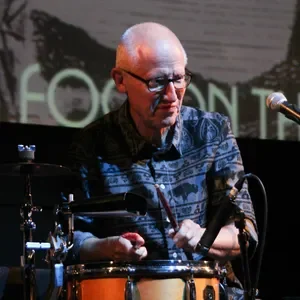
“Don’t give in. Keep trying, keep getting better, keep talking. And don’t have tunnel vision.”
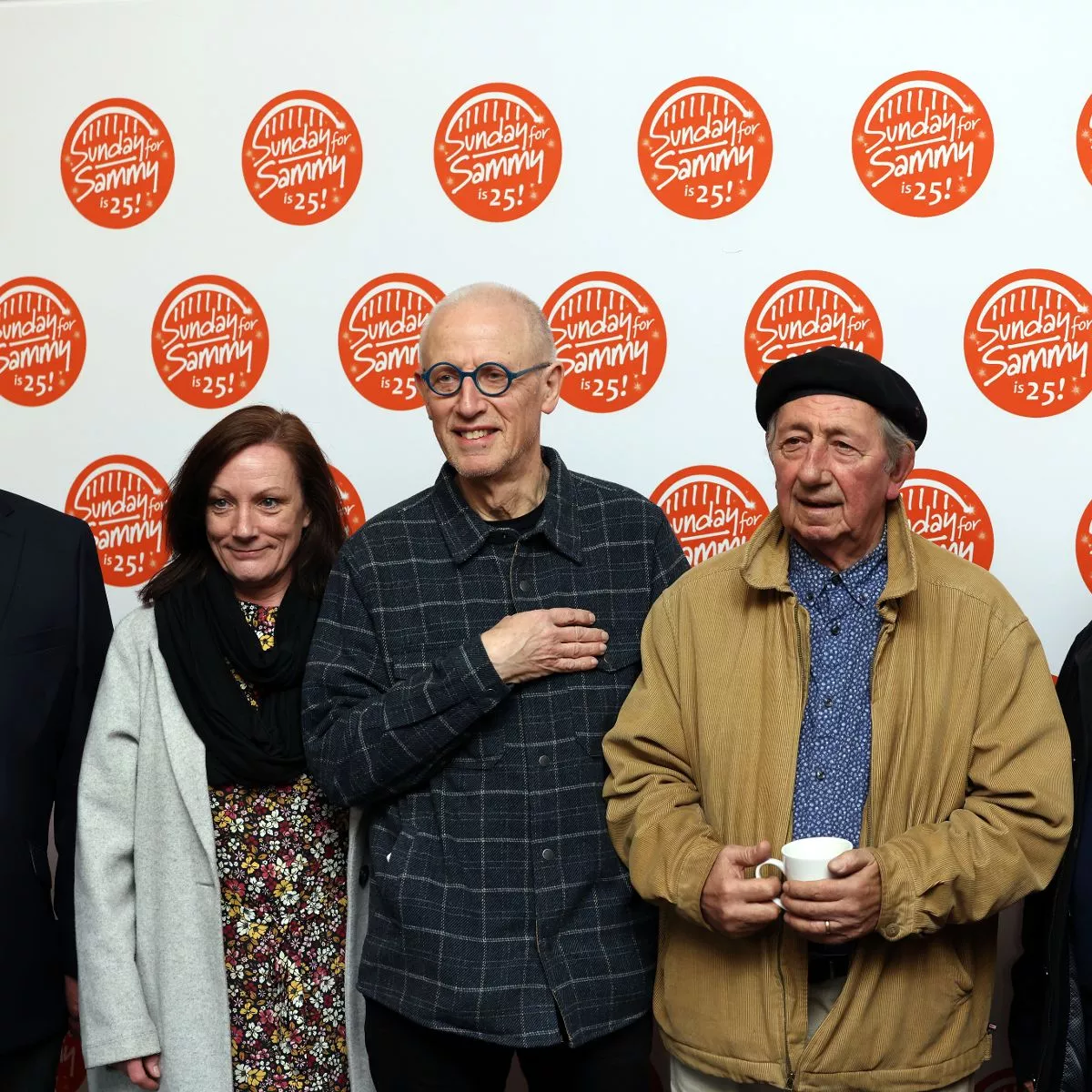
Photo depicting Ray Laidlaw at the ‘Sunday for Sammy is 25’ event via Chronicle Live
The Pull of Home
Yet success created tension. America beckoned with its vast market and touring opportunities. But Alan Hull, Lindisfarne's principal songwriter, struggled to write outside his environment. He was "a great observer of what was going on," Ray explained, "a writer first and a performer second. He had to be in his own surroundings for it to flow well."
This detail fascinated me. In an era when "making it" meant conquering America, Lindisfarne chose something different. Not out of lack of ambition, but from understanding that Hull's genius was tied to place, to observing life in the North East and transforming those observations into songs that mattered.
"With the benefit of hindsight, groups of musicians shouldn't say they 're gonna break up," Ray reflected. "They should say they're gonna have a rest."
The original band split in 1973, not through acrimony but through different priorities. Some had young families. Some wanted to tour the world. They made different choices but remained friends, playing on each other's albums, crossing paths constantly.
By 1976, they reunited for what was meant to be a one-off show at Newcastle City Hall. The reception was "absolutely astonishing." When they left the stage, the audience kept "cheering and clapping and shouting" for fifteen minutes. They'd already performed their entire setlist. Eventually, they returned and sang an old Christmas song acapella.
"I remember the warmth and the passion," Ray said. "It wasn't Lindisfarne's gig. It was everybody's music. It was their music, their band, their show, their city, their region. Something to shout about."
From Tribute to Movement
In 1999, Tim Healy rang Ray about organising a tribute show for their friend Sammy Johnson, who'd died of a heart attack at 49 whilst training for the Great North Run.
Sammy had been a working-class lad from Gateshead who'd discovered a gift for acting, becoming known for his role in Spender and beginning to write just as his career was taking off.
The show was thrown together quickly, "a very loose variety show" with sketches, comedy, songs. Tickets sold out immediately, largely because of the presence of Healy, Jimmy Nail, and Kevin Whately. The highlight was a sketch written by Dick Clement and Ian La Frenais featuring those three performing as their Auf Wiedersehen Pet characters live on stage for the first time ever.
"It just brought the house down," Ray recalled. "People had never seen those characters performed live, and it gave everybody a feeling nobody expected."
The BBC brought the series back within six months. More significantly, Healy and Nail realised this format, this gathering of North East talent, really worked. They decided to do it again. And again. Every two years.
The original idea was simple: raise money to help young people trying to get into the performing arts in the region. Small grants, a couple of grand here and there, to cover bus fares to London auditions, to buy a decent bow for a talented cellist, to fund three months so a playwright could finish her draft.
To date, Sunday for Sammy has given away over £700,000 in grants.
The Bottom Rung of the Ladder
When COVID forced a hiatus, Ray spent months consulting with arts organisations about whether to revive Sunday for Sammy. The response was consistent: "We really need Sunday for Sammy. Since you've been gone, it was like the bottom rung of the ladder was missing."
That phrase, the bottom rung of the ladder, captures precisely what Sunday for Sammy provides. Not just financial support, but validation. Other arts organisations used Sunday for Sammy as a "sounding board" Ray told me. If they funded someone, others were more inclined to look at them too.
The ripple effects extended further than Ray initially knew. They funded playwright Christina Castling to have three months to finish a play about Category D villages in County Durham, communities the council tried to close after the pits shut. When Live Theatre Productions toured the play, they found not just the usual circuit of 12 theatres but another 8-10 venues in village halls where people remembered those events and wanted to see the play.
"It didn't just help that one particular production," Ray explained. "It helps the actors, technical staff. It brings culture to those places. If we hadn't given that money to finish the play, that might never have happened."
Among the grantees: Rosie Ramsey, Emily Hoyle (now principal harpist in a symphony orchestra in Germany), numerous actors working in television and film, John Wolfe who plays saxophone in the 1975. Then comes “Young Sam Fender” who is someone Ray had known "since he was a young lad."
When I mentioned Fender's recent Mercury Prize win, Ray was beaming with pride and delighted: "Sam is the real deal. Proper rock and roll songwriter. Got everything it takes."
The Work Continues
Sunday for Sammy returns on 15th February 2026 at the Utilita Arena. Ray has produced every show since 2006, maintaining the spirit whilst evolving the format. When they outgrew Newcastle City Hall's 2,000-seat capacity, they moved to the arena, using about half the space for 6,000 people per show.
Behind the stage, Ray created "a little festival village" with cabaret seating, catering, and a big screen so the entire company watches the show together. "The atmosphere behind stage is just wonderful," he told me. "It's really positive. Everybody's cheering everybody else on."
The show sells thousands of tickets without announcing who'll perform, a testament to trust built over two decades. People buy tickets knowing it will be "the same but different," featuring familiar faces and new talent, sketches and music, all in service of funding the next generation.
When I asked Ray for advice to young performers, his answer was immediate: "Don't give in. Keep trying, keep getting better, keep talking. And don't have tunnel vision." He emphasised that making a living as a musician requires more than talent. You need marketing skills, financial management, diplomacy, digital literacy. "Any other skills you can pick up will enhance your chances."
Then he added something that feels quintessentially North East: "Be kind to people. Because you never know when you're gonna be in the same boat. If you can help somebody, do it."
The Nightly Miracle
Near the end of our conversation, Ray shared Oscar Wilde's description of theatre as "the nightly miracle", a wonderful expression because it's a contradiction.
A miracle doesn't happen every night, but when you get a bunch of people and you suspend reality and you all believe in this thing. “One of the best jobs in the world is to be in a band playing to an audience that's getting it. That bond you get, I've never experienced anything like it in any other walk of life."
Ray's played Newcastle City Hall approximately 150 times, probably more than anyone else. He's created music that defined a region whilst reaching far beyond it. He's witnessed the power of collective belief, experienced it from the stage, and now facilitates it for others.
What stays with me from this conversation is how naturally Ray connects legacy to action. Sunday for Sammy isn't nostalgia, it's the infrastructure it provides. It's successful artists saying: we climbed this ladder, now we're reinforcing the bottom rungs so others can climb too.
In a region that's seen industries collapse and opportunities vanish, in communities where "the bottom rung of the ladder" has been systematically removed, Sunday for Sammy represents something radical: the belief that talent exists everywhere but opportunity doesn't, and those who've succeeded have a responsibility to change that.
Ray's favourite Geordie word is "canny", an “all purpose word, fits any situation." It's a perfect choice. There's something deeply canny about taking the success of a tribute show and transforming it into a sustainable model for supporting young artists. Something canny about understanding that the best way to honour a friend's memory isn't just looking backward but creating opportunities forward. It’s also canny, that Ray’s figured out (probably without trying to figure it out) that audiences don't just show up for Lindsfarne and Sunday for Sammy because they want to remember the past. They show up because Ray, Tim, Jimmy and all those involved, have found a way to turn their past success into other people's future chances. Using the currency of what was to buy what could be.
Until next time,
Alison Dunn
Sunday for Sammy
The next Sunday for Sammy show takes place on Sunday 15th February 2026 at the Utilita Arena Newcastle. Tickets are still available here.
For more information or to support the charity's work with young performers, visit the Sunday for Sammy website or contact them about how you or your business can help.
Listen to the full This is the North podcast:
> Spotify
> Apple Podcasts
If you enjoyed this newsletter, please like, share and subscribe. It takes less than 10 seconds and makes you part of something essential: a community of people who believe transformative conversations can become catalysts for positive change.
This Is The North is your source for transformative conversations that challenge systems holding back the North of England. Hosted by Alison Dunn, supported by Society Matters Foundation.
A deep dive into the archive…
The band Lindisfarne had global success, but that success stratospheric as it was, was rooted here in the North East so as I look back through our archives, I couldn’t help but think about the conversation I had with Brian Aitken, the former editor of the Journal newspaper, founder of the online magazine QT, and the powerhouse behind the hugely successful Eyes and Ears publication that drops into my inbox every week. Just like Ray, Brian has used his extensive experience and connections collected over decades working at the top of his industry, and turned them into something good for the North East community, two real-life examples of bridging the gap between their professional careers and their communities.
This week I have been listening to…
Ray reminded me to take another look at the music of our very own Mercury Prize Winner, Sam Fender so I’ve been rocking out all this week to People Watching, the album was released as recently as October 2025 and was “praised by the judgement panel for its cohesion, character, and ambition” – I have no such lofty words, I’ll just say “it’s cracking”.
This week I have been visiting…
I’ve had a busy week or two with trips to Manchester to attend the Business Cloud Northern Leaders Award Ceremony alongside Sophie Milliken of Moja, Nicola Wood of the Wonderful Wig Company, Steph Capewell of Love Amelia, Mads Howard MBE of Sage and Paul Blake of Newcastle Eagles as well as sharing a fabulous evening with my mate Steve Beharall and the team at the Newcastle United Foundation for their Annual dinner – what a night that was, as Eddie Howe was inducted into the Newcastle United Hall of Fame.
Steve was one of the very first guests on the show, along with Charlie Charlton who I also spent an afternoon with at the North East Chamber of Commerce Inspiring Female Awards yesterday – it’s been a week for bumping in to friends! Amongst the fabulous women nominated for Inspiring Female Awards I was pleased to see amongst the winners my friends and allies Gill Hunter of Square One Law, Steph Capewell of Love Amelia (picking up her second award of the week!) and Aoife Forbes of Forbes Finishings (Gift Wrapping Service).